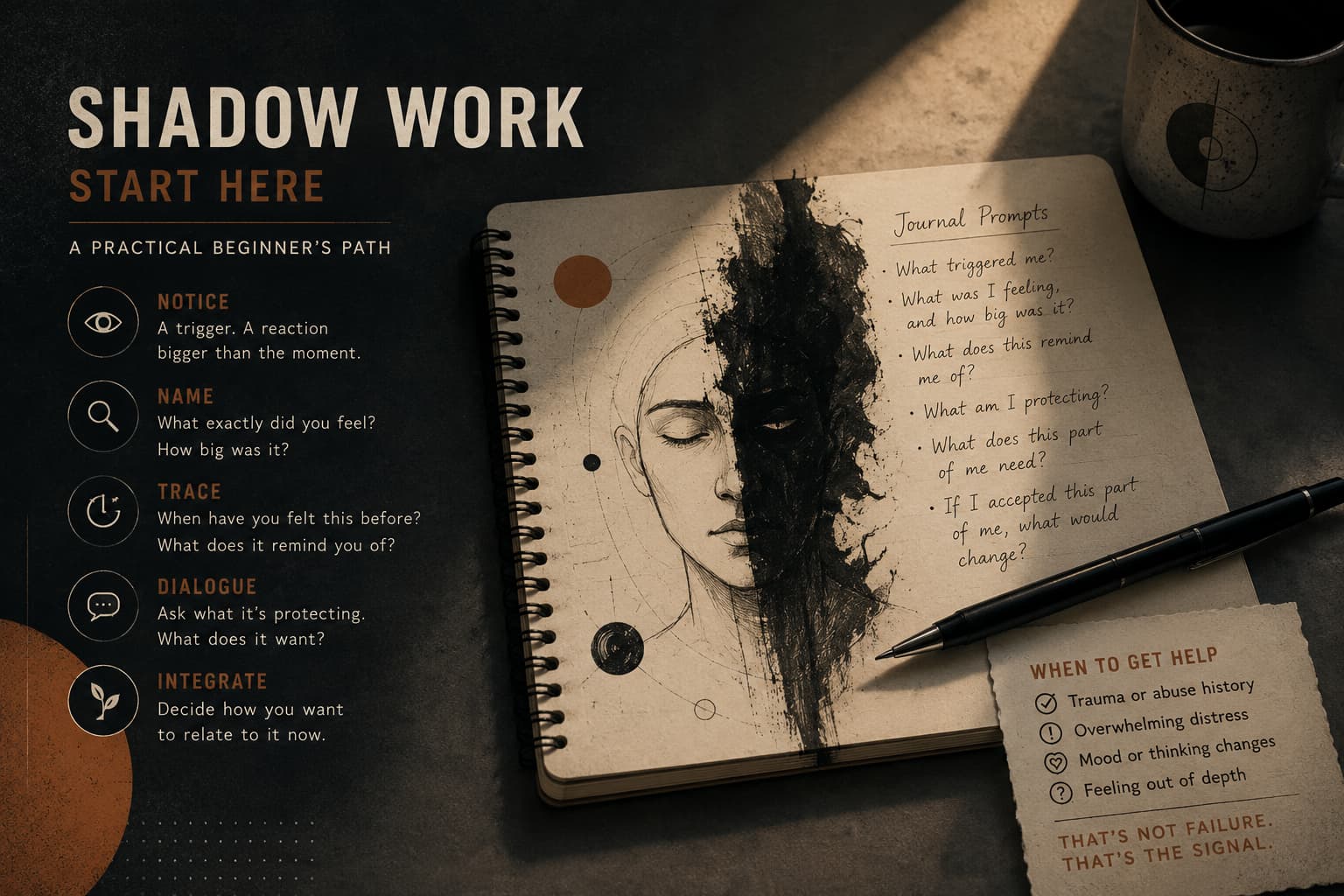
Shadow work is the practice of getting to know the parts of yourself you've pushed out of sight — and bringing them back into awareness. That's the whole thing, stripped of mystique. No candles required. It's uncomfortable, it's useful, and almost anyone can begin.
Where it comes from
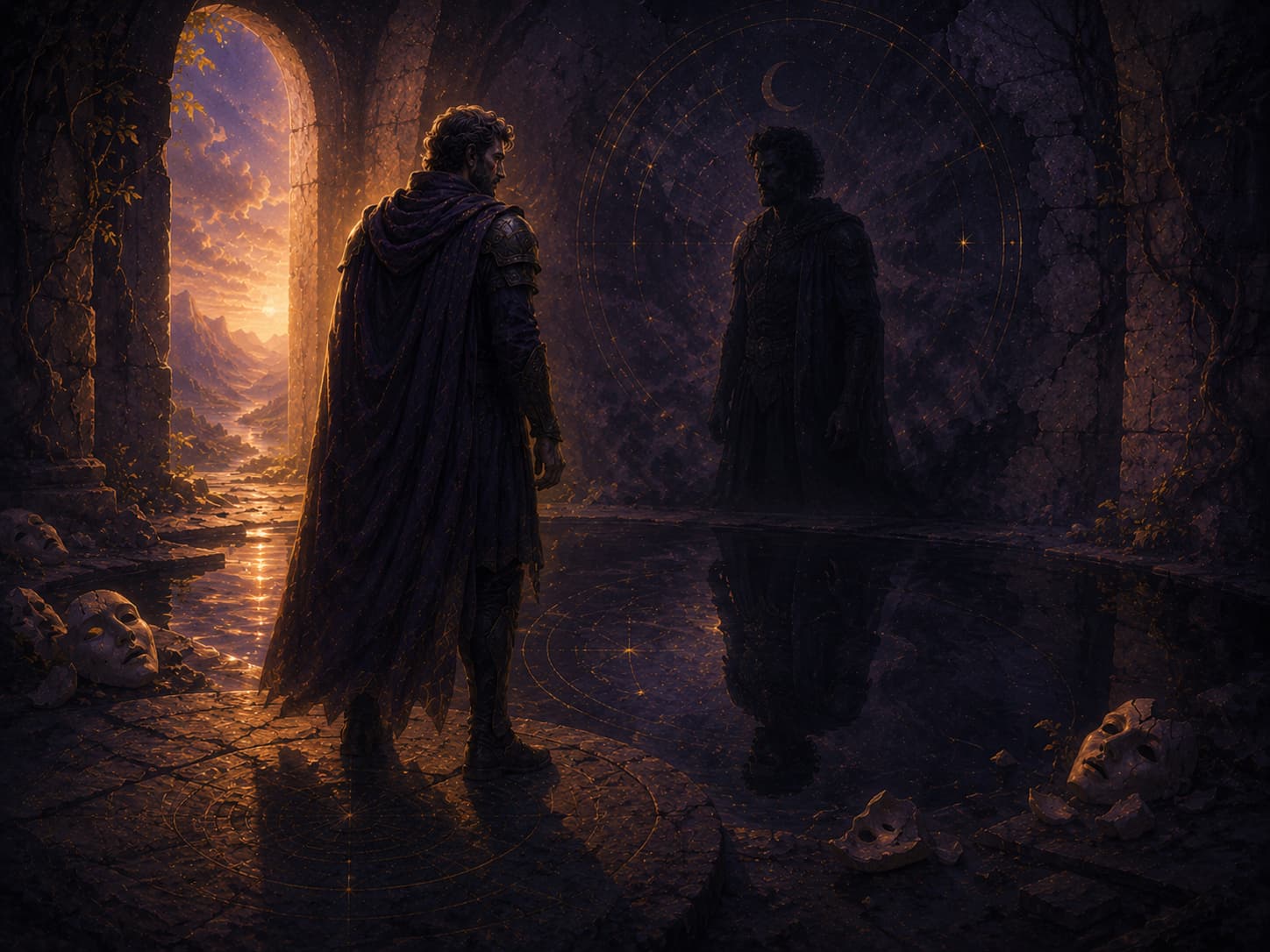
The idea traces to Carl Jung, who used the term shadow for the side of the personality we don't consciously identify with — the traits we've decided aren't "us". The phrase "shadow work" came later, but the core is his: what you refuse to look at in yourself doesn't disappear, it just runs in the dark. (For the deeper Jungian background, see the guide to Jung's archetypes and the shadow.)
What "the shadow" actually is
A common misread is that the shadow is the "evil" in you. It's broader than that. The shadow is whatever got repressed because it wasn't welcome — and that includes good things. Plenty of people have exiled their ambition, their anger (which protects boundaries), their playfulness, their desire to be seen. If you were praised for being calm, your fire may be in shadow. If you were praised for being good, your appetite may be. The shadow is the disowned, not the dark.
Why do shadow work
Because the disowned parts run your life from underneath until you look at them. They leak out as overreactions, as the traits you can't stand in others, as patterns you keep repeating and can't explain. Bringing them into awareness gives you back the energy you spent suppressing them, softens the projections that wreck your relationships, and makes you harder to hijack. It's the practical engine of what Jung called individuation.
How to start
Three doorways, all low-tech:
- Triggers. When a reaction is bigger than the moment, follow it down. (More in emotional triggers and your shadow.)
- Projection. The trait that most enrages you in others — ask whether you've exiled it in yourself.
- Journalling. Write toward the uncomfortable honestly. A set of shadow work journal prompts gives you somewhere to start.
Common myths
It isn't "dark magic" and it isn't inherently dangerous. It's self-examination, the same kind good therapy uses. You don't have to summon anything; you have to be honest. That said, it can stir up real material — so go at a pace you can handle, and don't try to white-knuckle through serious trauma alone (more on that in how to start shadow work without a therapist).
Frequently asked questions
What is shadow work in simple terms?
Becoming aware of the parts of yourself you've hidden, denied, or never let yourself express — and learning to own them instead of being secretly run by them.
Is shadow work dangerous?
For most people, done gently, no — it's structured self-reflection. It can surface difficult feelings, so pace yourself and seek support if you're working with trauma or you feel out of your depth.
Do I need a therapist for shadow work?
Not to begin. You can start on your own with journalling and honest attention to your triggers. A therapist becomes important if you're dealing with trauma, crisis, or material that feels too big to hold alone.
Last reviewed June 2026. This is self-reflection grounded in Jung's framework, not a clinical assessment or a substitute for therapy.
The fastest way to start is to know which part of you is most disowned. Take the archetype and shadow test.