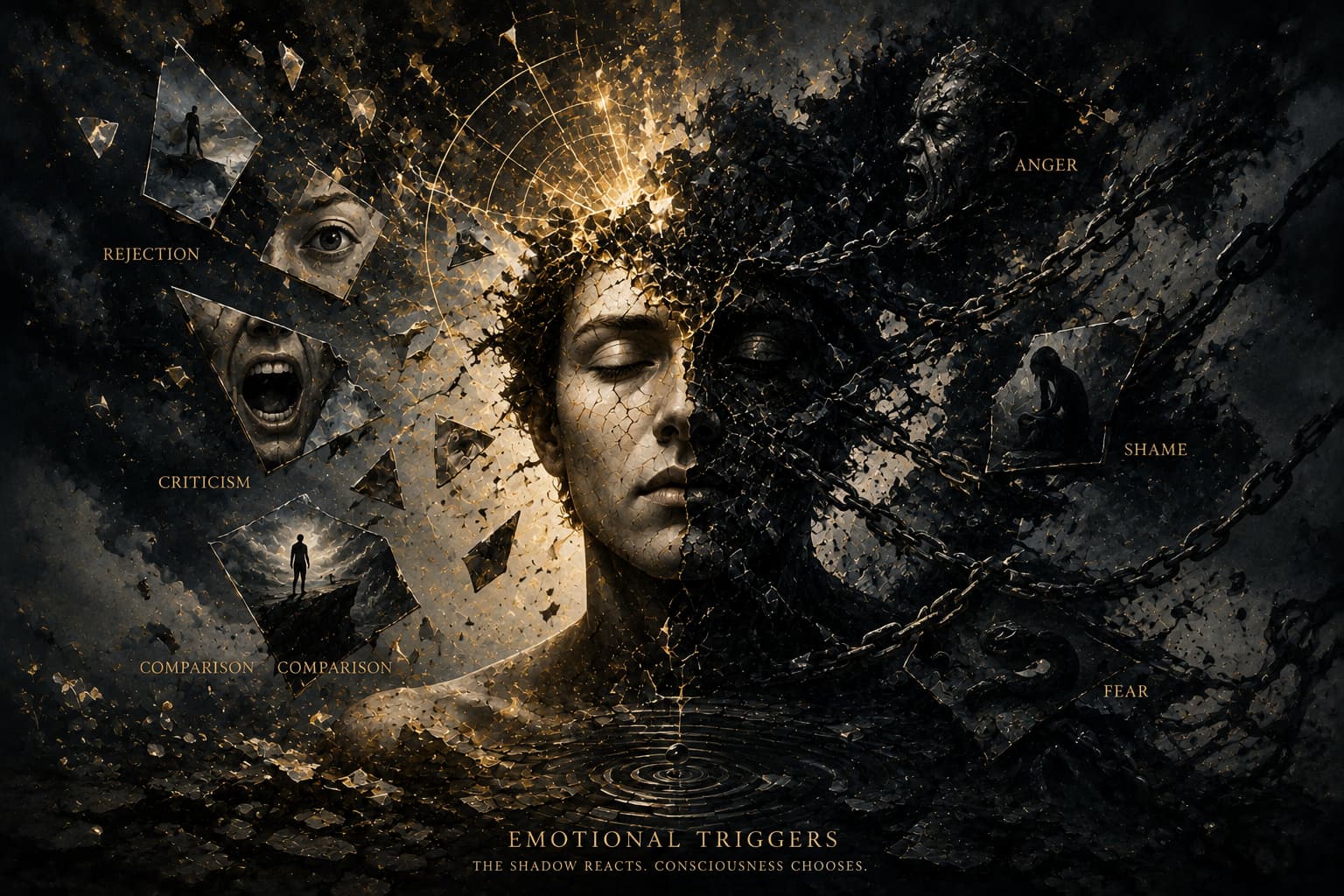
An emotional trigger is a reaction that's too big for its cause — a flash of rage, shame, or panic that's out of proportion to what actually happened. That mismatch is the useful part. A trigger is a doorway: the size of the reaction is pointing at something underneath, and learning to read it is one of the most direct ways into your shadow.
Why we get triggered
When a response fits the situation, it passes through and is gone. When it's disproportionate — when a small comment ruins your afternoon, or a stranger's tone hijacks your whole nervous system — something else has been activated. The present moment knocked on a door that was already loaded. The extra charge isn't about the trigger; it's about what the trigger touched.
Triggers and projection
The sharpest version of this is what enrages you in other people. The traits that provoke an instant, contemptuous reaction — the show-off, the needy one, the one who takes up too much space — are very often traits you've exiled in yourself. Jung called this projection: you can't see the disowned quality at home, so you spot it (and punish it) out in the world. The intensity of your judgement is roughly the size of what you're not owning. It's an unflattering rule of thumb, and an extremely reliable one.
How to track your triggers
You don't have to do anything dramatic in the moment — in fact, acting in the moment is usually the worst time. The practice is to notice and record. When something lands too hard, jot down what happened, what you felt, and how big the reaction was relative to the event. Over a few weeks the patterns surface: the same theme keeps detonating — being dismissed, being controlled, being left out, not being good enough. Those themes are a map of your shadow drawn by your own reactions.
From reaction to insight
The turn happens when you stop asking "why did they do that to me?" and start asking "what in me did that touch?" Not as self-blame — the other person may well have been out of line — but because only one of those questions gives you something you can work with. A trigger handled this way stops being a thing that happens to you and becomes information about you. That's the whole move: from being run by the reaction to reading it.
Frequently asked questions
What is an emotional trigger?
A stimulus — a word, tone, situation, or person — that sets off a reaction larger than the moment seems to call for, because it's activating something deeper that's already there.
Why do small things trigger me so much?
Because the small thing is touching something bigger that's been pushed out of sight. The size of the reaction reflects what's underneath, not the size of the event itself.
How do I stop being triggered?
The goal isn't to never be triggered — it's to stop being run by it. Notice the reaction, pause before acting, and get curious about what it touched. Over time the charge on a well-understood trigger fades.
Last reviewed June 2026. This is self-reflection, not a clinical assessment.
Your triggers are already mapping your shadow. See which one they keep pointing to.