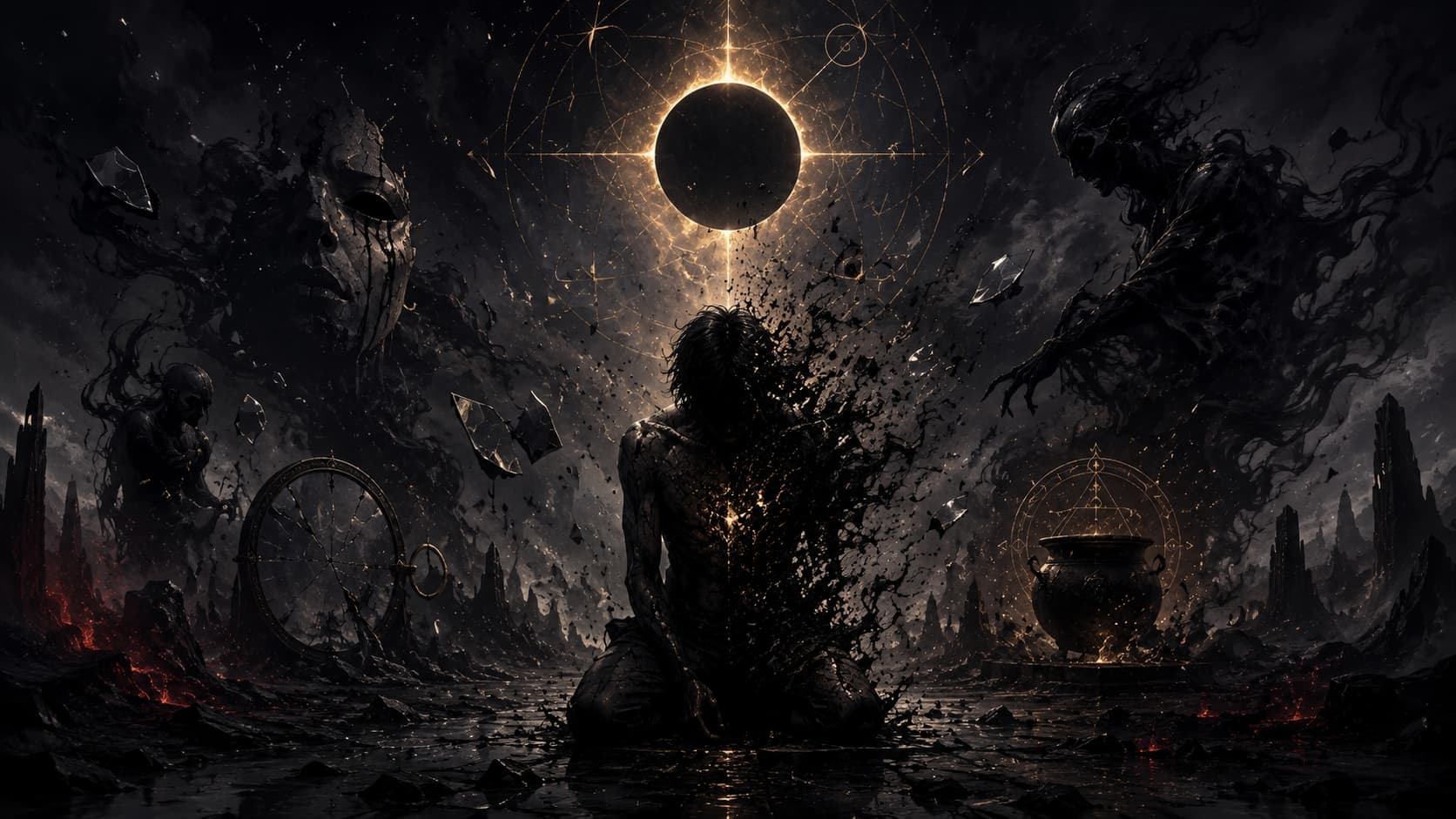
Nigredo — the "blackening" — is the first and darkest stage of inner transformation: the point where your old image of yourself comes apart and you're left in the dark with what's underneath. In shadow work, it's the painful confrontation that has to happen before anything genuinely changes.
It's the stage people most want to skip and least can.
What nigredo feels like
From the inside it rarely looks like "transformation". It looks like things falling apart. The story you told about yourself stops holding. A version of you that worked for years suddenly doesn't. You feel disoriented, exposed, sometimes ashamed — like you've seen something about yourself you can't un-see. There's often a flatness or a heaviness that doesn't have an obvious cause.
It's worth naming plainly: this is uncomfortable, and it's supposed to be. Nigredo isn't a pleasant stage with a difficult patch. It's the difficult patch.
Why it's necessary
Nothing reorganises while it's still defended. As long as the old self-image is intact, there's no opening for anything new — you just keep running the same program more carefully. The breakdown is what creates the space. You don't meet your shadow on a good day when everything's working; you meet it when the usual strategies stop working and you're forced to look at what they were covering.
Nigredo and the shadow
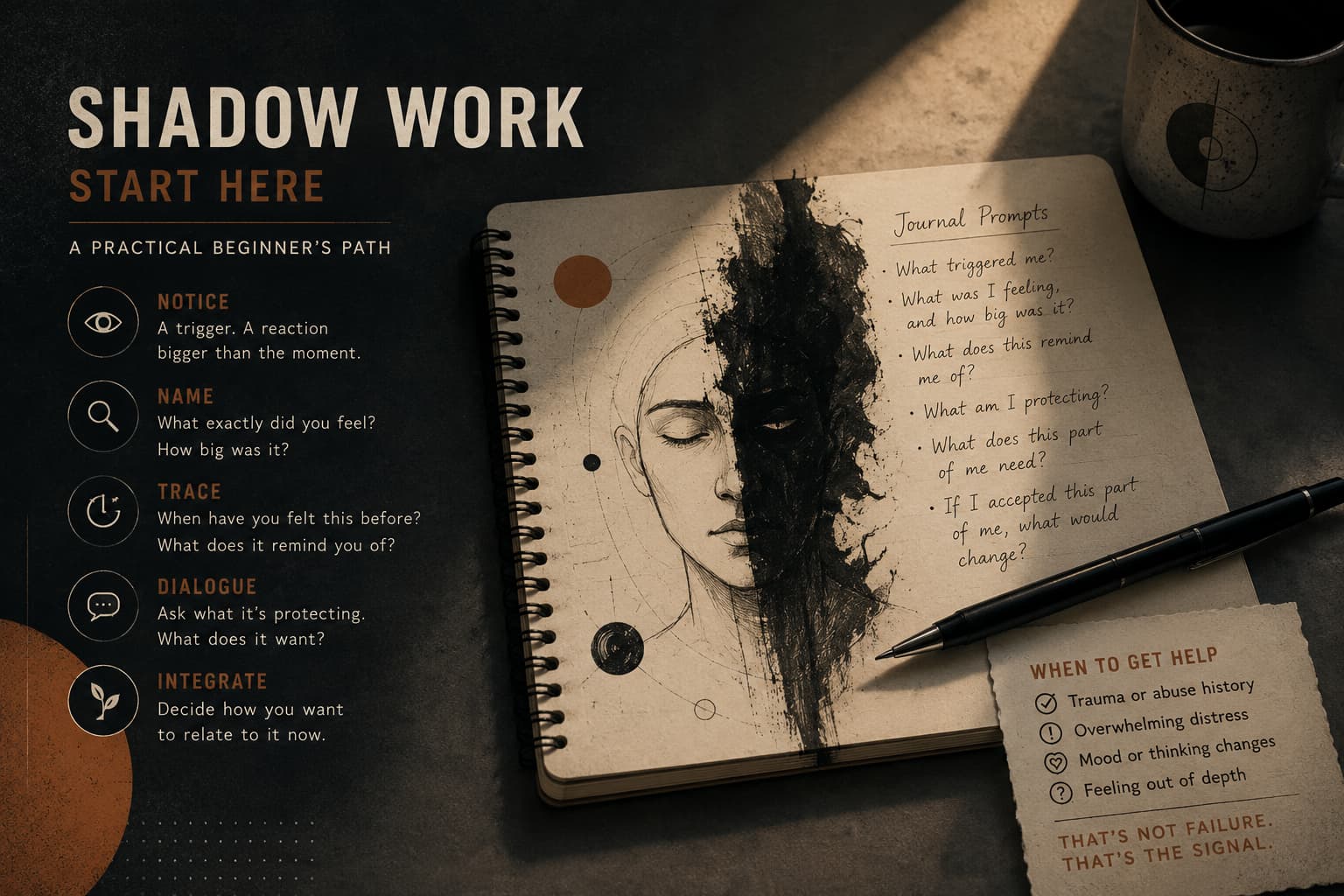
The blackening is the encounter with the shadow — the traits, needs, and feelings you'd pushed out of sight because they didn't fit who you were trying to be. What surfaces in nigredo is usually exactly what you'd disowned: the anger, the neediness, the ambition, the fear. It feels dark partly because it's literally the material you kept in the dark. This is the same blackening described in the alchemical sequence of nigredo, albedo and rubedo.
How to move through it
The two failure modes are rushing and getting stuck. Rushing means slapping a positive reframe on it before you've actually looked — which just re-buries the material. Getting stuck means mistaking the dark for the destination and settling into despair as an identity.
What helps: writing it down rather than only spinning it in your head; naming the specific thing you're seeing rather than drowning in a vague heaviness; and not doing the deepest version of it completely alone. Nigredo is for moving through.
Signs you're in nigredo
A self-image that worked for years suddenly feels false.
You're seeing things about yourself you'd rather not have seen.
Old coping strategies have stopped delivering.
There's a disorientation that doesn't map onto a single external event.
You sense something is changing, even though it mostly feels like loss.
Frequently asked questions
What does nigredo mean?
It's the alchemical term for "blackening" — the initial stage of dissolution. Jung used it for the psychological breakdown and shadow-confrontation that begins real transformation.
How long does nigredo last?
There's no fixed length; it varies with the person and the depth of what's surfacing. The aim isn't to extend it or escape it instantly, but to move through it deliberately rather than getting stuck.
Is nigredo the same as a dark night of the soul?
They overlap closely. The "dark night of the soul" comes from Christian mysticism; nigredo comes from alchemy. Both name a stage of darkness and dissolution that precedes a deeper renewal.
Last reviewed June 2026. This is a reflective framework, not clinical advice. If you're in genuine crisis, please reach out to a professional or a crisis line.
If something is surfacing right now, it helps to know what you're looking at. Find which shadow is closest to your surface.