The villains that stay with you aren't memorable because they're evil. They're memorable because they're recognisable — each one is a shadow taken to its extreme, a disowned human impulse with the brakes cut. The best bad guys aren't the opposite of us. They're a part of us, amplified until it's monstrous.
The shadow archetypes in villains
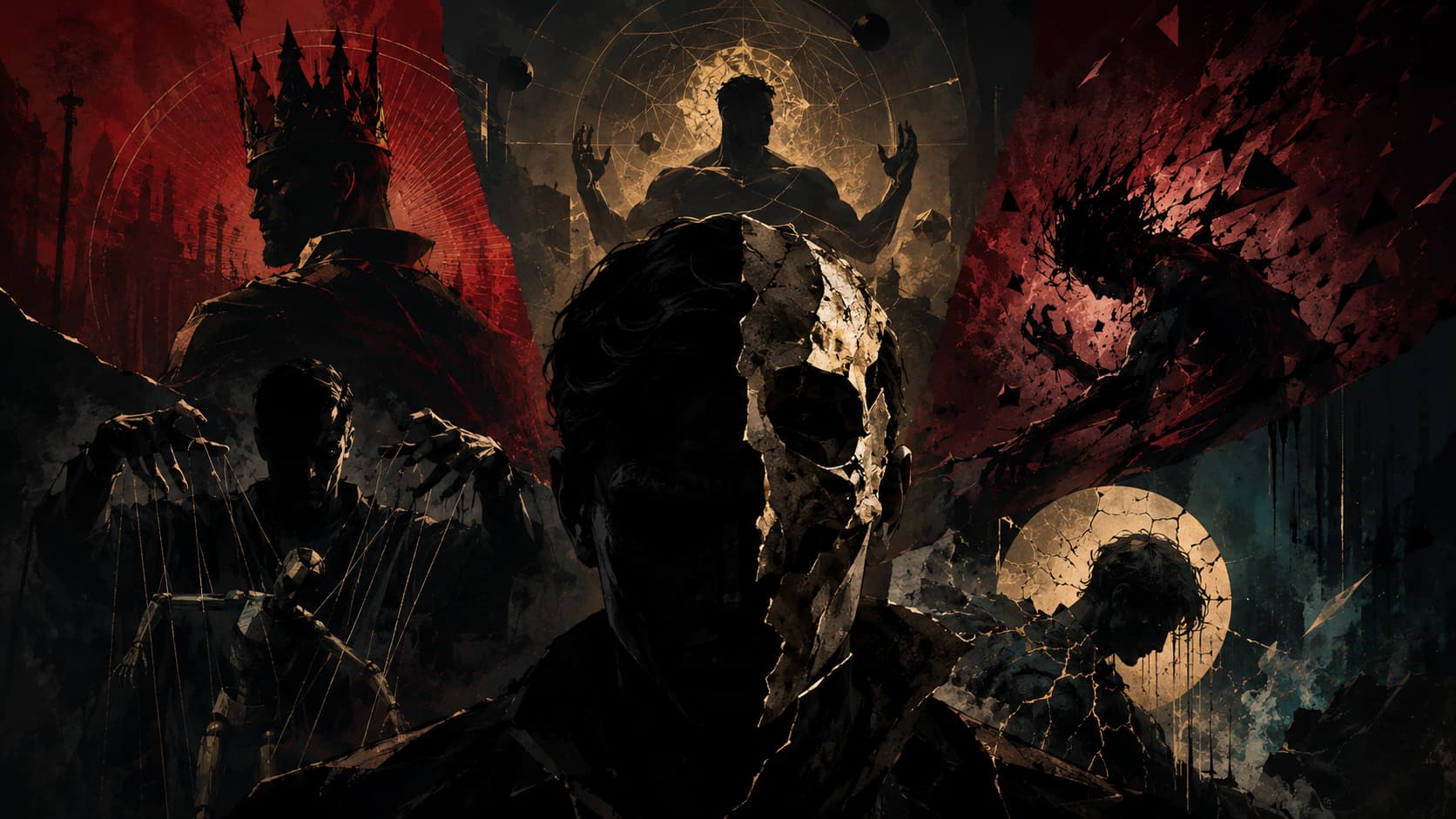
Most unforgettable antagonists are versions of a few dark patterns (described here as types, not pulled from any single film):
The Tyrant — control turned absolute. The despot who equates obedience with respect and crushes anything that won't bend. The Ruler archetype with its conscience removed.
The Manipulator — the schemer who works through other people, pulling strings from the shadows, weaponising charm and information.
The Demiurge — the would-be god who decides he knows best for everyone and remakes the world by force, certain his cruelty is actually mercy.
The Disruptor — the agent of chaos who tears things down for the sake of it, the villain with no plan but collapse.
The Fallen — the tragic one who started good and was broken into villainy; the most sympathetic, because we can see the wound.
Why villains fascinate us
There's a reason the antagonist is so often the most interesting figure on screen. Villains do what we don't let ourselves do. They take the rage, the ambition, the contempt, the will to power that most of us keep firmly in the shadow — and they act on all of it without apology. Watching them is a safe, vicarious release: for two hours, your own disowned material gets to walk around in someone else's body. We're not horrified by villains so much as uneasily thrilled, and the unease is the giveaway.
The villain in you
This is the uncomfortable turn, and the useful one. If a villain is a shadow amplified, then the reason they resonate is that you've got the same raw material — just dialled down and kept in check. The pleasure of a great villain is partly the pleasure of recognition. That's not a problem to be ashamed of; it's information. The parts of you that thrill to the bad guy are pointing at exactly what your own shadow work could reclaim, before it leaks out in smaller, real-life ways.
Frequently asked questions
What are villain archetypes?
Recurring patterns that memorable antagonists are built on — the Tyrant, the Manipulator, the Demiurge, the Disruptor, the Fallen, and others. Each is a human impulse pushed to a destructive extreme.
What is a shadow archetype?
The dark, disowned counterpart of a personality pattern — the repressed or destructive form of a trait. Villains are shadow archetypes given a face; in ordinary life, the same shadows show up in far quieter ways.
Last reviewed June 2026. Archetypes are a lens for self-reflection, not a clinical assessment.
Every villain is a shadow with the volume up. Find out which shadow is yours.