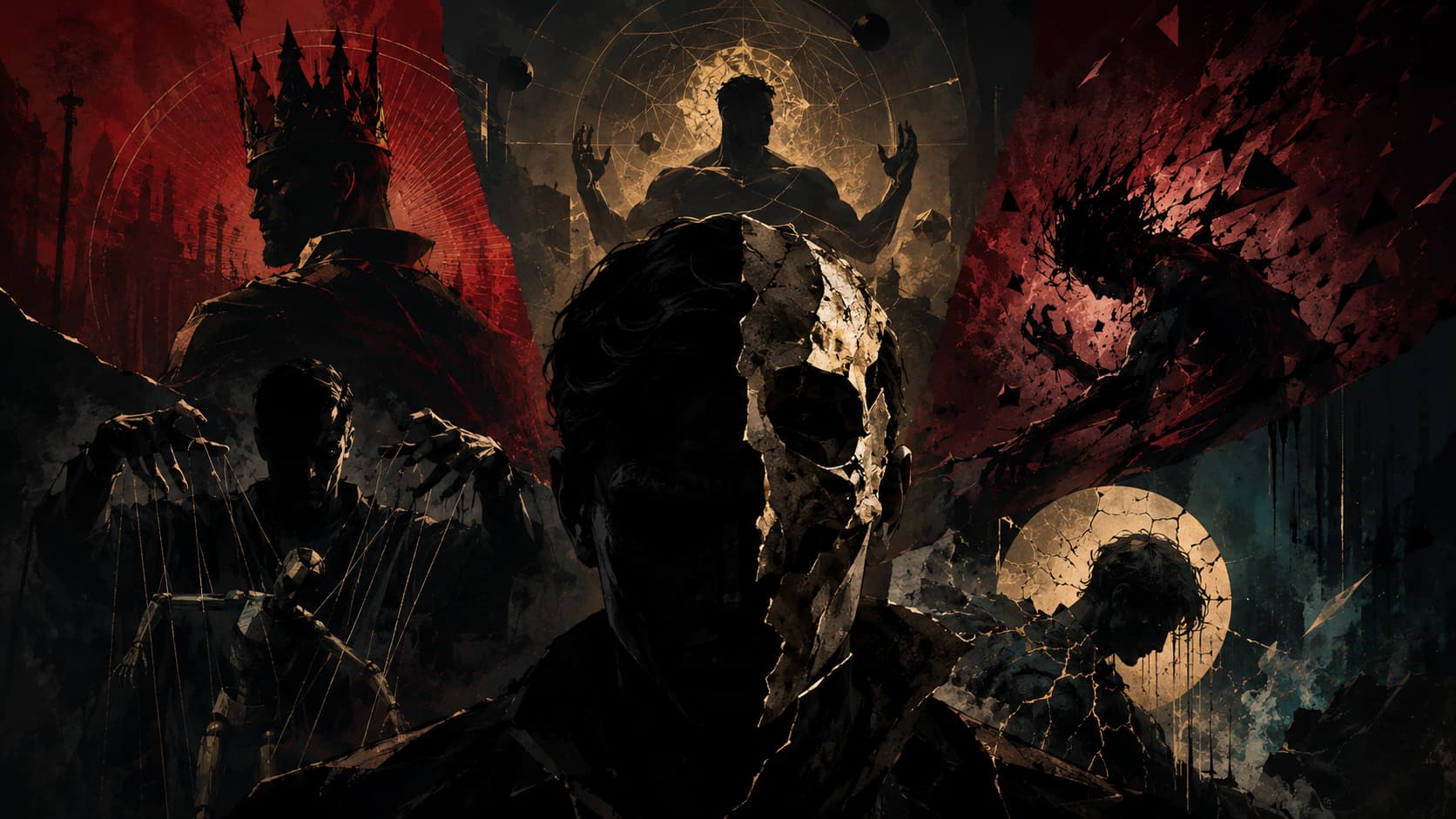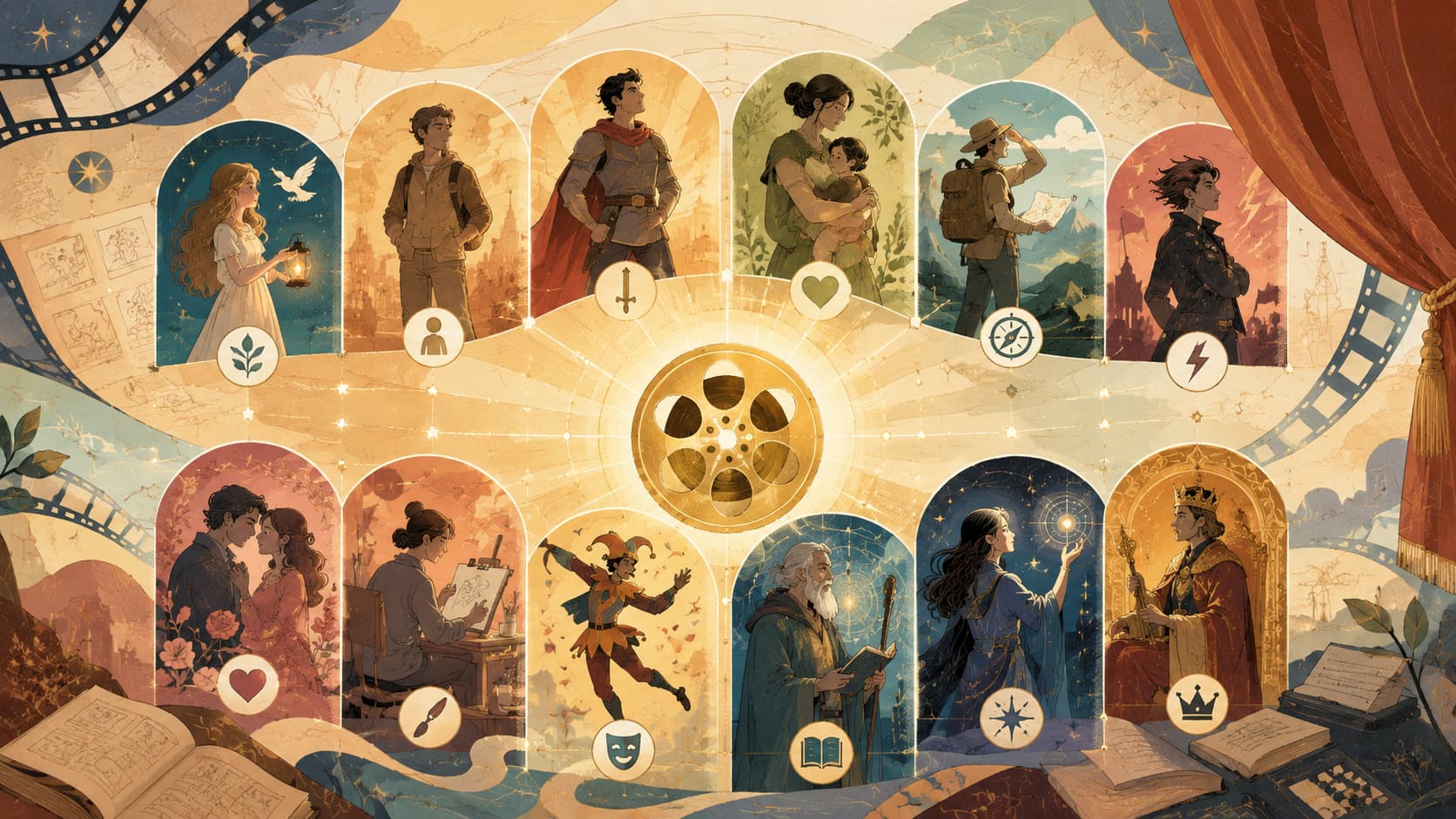
Watch enough films and the same figures keep walking on: the reluctant Hero, the wise old mentor, the charming troublemaker, the innocent who sees what everyone else misses. These are archetypes — recurring roles the human imagination returns to again and again — and twelve of them shape most of the stories we remember.
Here's each, with the type of character you'll recognise (described as roles, not lifted from any one film).
The 12 archetypes, one by one
The Innocent — the pure-hearted optimist who believes in good and is often proven, eventually, right. Think the wide-eyed newcomer whose faith survives a cynical world.
The Everyman — the ordinary person we see ourselves in, pulled into something larger than they asked for. The reluctant, relatable lead.
The Hero — the one who rises to the challenge, faces the threat, and is changed by the fight. The backbone of the adventure.
The Caregiver — the protector who puts others first, the nurse, the parent, the one who stays behind to help.
The Explorer — the restless seeker who can't stay put, forever heading for the next horizon.
The Rebel — the rule-breaker who refuses the system, the outlaw with a point.
The Lover — driven by connection, passion, and devotion; the one for whom the relationship is the story.
The Creator — the maker and visionary who has to bring something new into the world.
The Jester — the trickster who punctures pomposity and tells the truth sideways, through a joke.
The Sage — the seeker of truth and the mentor; the one who understands and explains.
The Magician — the transformer who bends reality and reveals hidden laws; the visionary or the literal wizard.
The Ruler — the leader who craves order and control, for good or ill; the king, the boss, the one in charge.
Why we respond to them
The reason these figures land so reliably isn't clever marketing. Jung argued they live in the collective unconscious — a shared layer of inherited patterns common to all of us. When a story hits an archetype cleanly, it resonates because it's echoing something already inside you. You don't learn the Hero; you recognise it. For the fuller theory, see the guide to Jung's archetypes and the collective unconscious.
Which one are you?
Here's where it gets personal. You don't just watch these archetypes — you live one (or a few). The characters you're drawn to, the ones you can't stand, the role you play in your own story: all of it points at the archetype running closest to your surface. Stories are a low-stakes mirror. Your own life is the higher-stakes one.
Frequently asked questions
What are the 12 story archetypes?
The Innocent, Everyman, Hero, Caregiver, Explorer, Rebel, Lover, Creator, Jester, Sage, Magician, and Ruler — twelve recurring roles that underpin most memorable characters.
What's the difference between an archetype and a character?
An archetype is a universal pattern or role; a character is one specific, fully-drawn version of it. The Hero is an archetype; a particular brave, flawed protagonist is a character built on it. One archetype can produce thousands of distinct characters.
Last reviewed June 2026. Archetypes are a lens for understanding stories and ourselves, not a clinical assessment.
You're living one of these right now. Find out which.