 The Lover
In Jung's model, the anima is the inner feminine image carried in a man's unconscious, and the animus is the inner masculine image carried in a woman's. They're the "contrasexual" figures — the disowned other half — and they have an outsized influence on who you're drawn to and how you relate.
A modern caveat first
Jung wrote in the early-to-mid twentieth century, and his framing is gendered in a way that needs translating. It's most useful to read the anima and animus as inner qualities a culture coded as feminine or masculine — tenderness, receptivity, logic, assertiveness — rather than a literal claim about men, women, or who can have which. The mechanism he described works regardless of how you map it onto gender today.
Anima and animus
The anima tends to carry the qualities a man learned not to develop openly — emotional depth, vulnerability, intuition, relatedness. The animus tends to carry the qualities a woman learned to keep quiet — direct assertion, sharp judgement, will. Whatever you weren't encouraged to live consciously doesn't vanish; it goes inward and takes on a kind of figure in your psyche.
How they form
These inner images are shaped early — by your opposite-sex parent, by the culture's scripts, and by everything you were taught wasn't "yours" to express. A boy taught that softness is weakness still has softness; it just goes underground as anima. A girl taught that anger is unladylike still has anger; it becomes animus. The figure is partly personal history and partly inherited image.
Projection in relationships
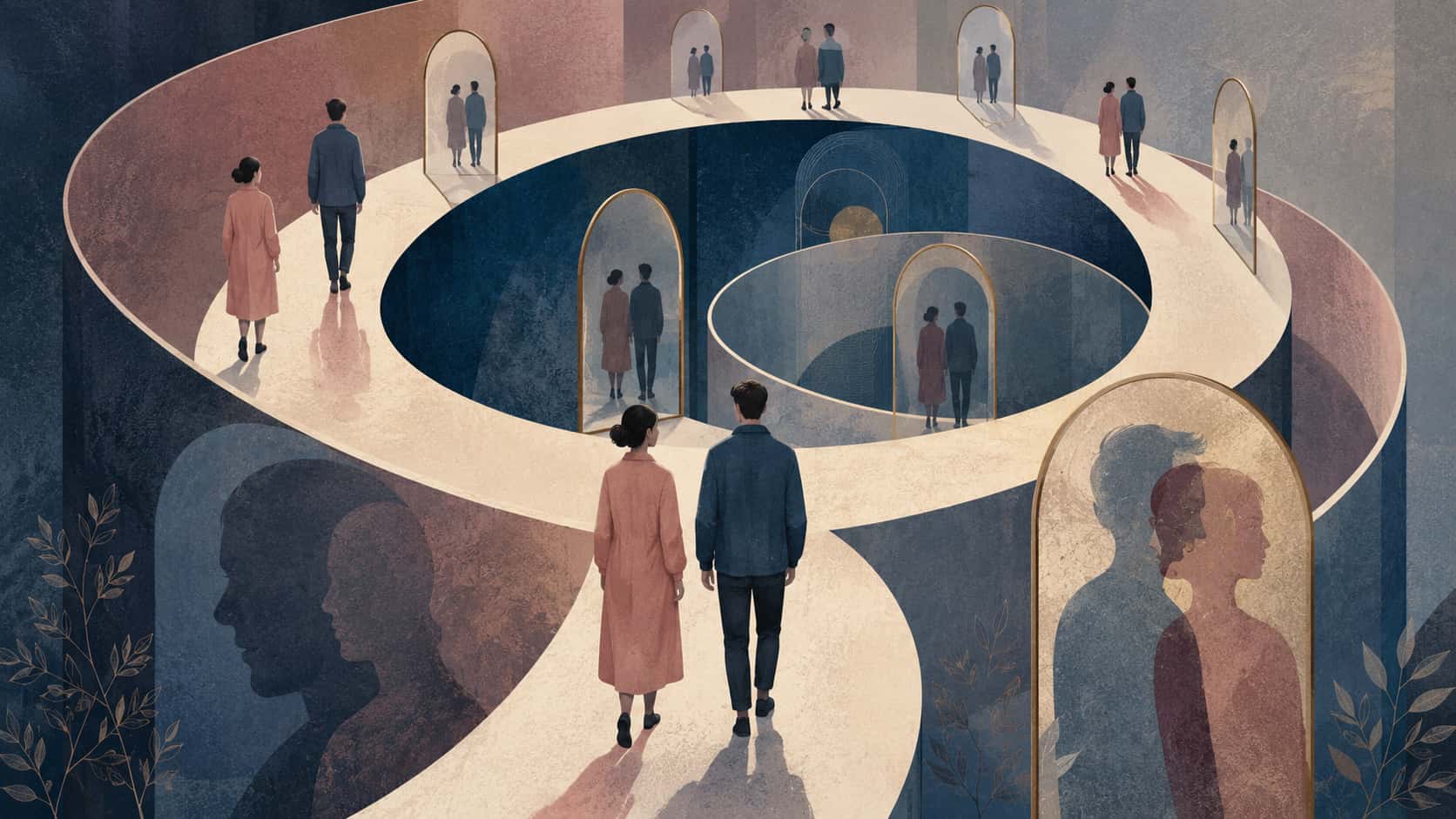
Here's where it gets practical, and a little painful. Because these figures live in the unconscious, you don't experience them as yours — you experience them out in the world, on other people. You fall hard for someone who seems to embody your anima or animus, and the intensity feels like destiny.
What's actually happening, often, is that you've draped your own disowned half over a real person. For a while it's electric. Then the person turns out to be a person — with their own moods and limits and inconvenient reality — and the projection slips. The disappointment that follows ("you've changed", "you're not who I thought") is frequently the projection wearing off, not the partner deteriorating. This is one of the engines behind repeating relationship patterns.
The stages of development
Jung sketched a rough maturing of these figures — from a purely physical or idealised image, through more complex and individual forms, toward a relationship with the inner figure as a genuine source of wisdom rather than a hook for projection. The arc is from "out there, on a person" to "in here, a part of me".
Integrating them
Integration starts with catching the projection: noticing when your reaction to someone is too big, too fated, too perfect to be about the actual human in front of you. The qualities you're so magnetised by are usually ones you've exiled in yourself. Reclaiming them — letting a man own his tenderness, a woman own her directness — both steadies your relationships and makes you more whole. You stop demanding that a partner be the missing half, because you're carrying it yourself.
Frequently asked questions
What is the difference between anima and animus?
The anima is the inner feminine in a man's psyche; the animus is the inner masculine in a woman's, in Jung's original framing. Both are best understood as disowned contrasexual qualities, not literal gender claims.
Can a woman have an anima?
In Jung's strict model the woman's contrasexual figure is the animus. Many later thinkers argue everyone carries both, and that the more useful question is which inner qualities you've disowned, whatever their cultural gender coding.
How does the anima show up?
Often through projection — an overwhelming, fated attraction to someone who seems to embody it — and through moods, fantasies, and the qualities you most admire or are unsettled by in others.
Last reviewed June 2026. Jung's model is an influential framework, not settled science, and isn't a statement about anyone's gender or identity.
Curious which inner figures and patterns shape how you love? Take the archetype and shadow test.