In Jungian psychology, the Self is the centre and the totality of the whole psyche — everything you are conscious of and everything you aren't. It's not the "I" you mean when you say your name. That's the ego. The Self is the larger thing the ego is only one part of.
Jung capitalised it deliberately, to separate it from the casual "self" of self-help. For him it was both the organising centre that the rest of the psyche arranges itself around, and the destination of a lifetime's growth.
The Self vs the ego
Start with the ego, because you already know it from the inside. The ego is the centre of your conscious mind — the part that wakes up in the morning, remembers your name, makes plans, and narrates your day. It's necessary. Without a stable ego you couldn't function.
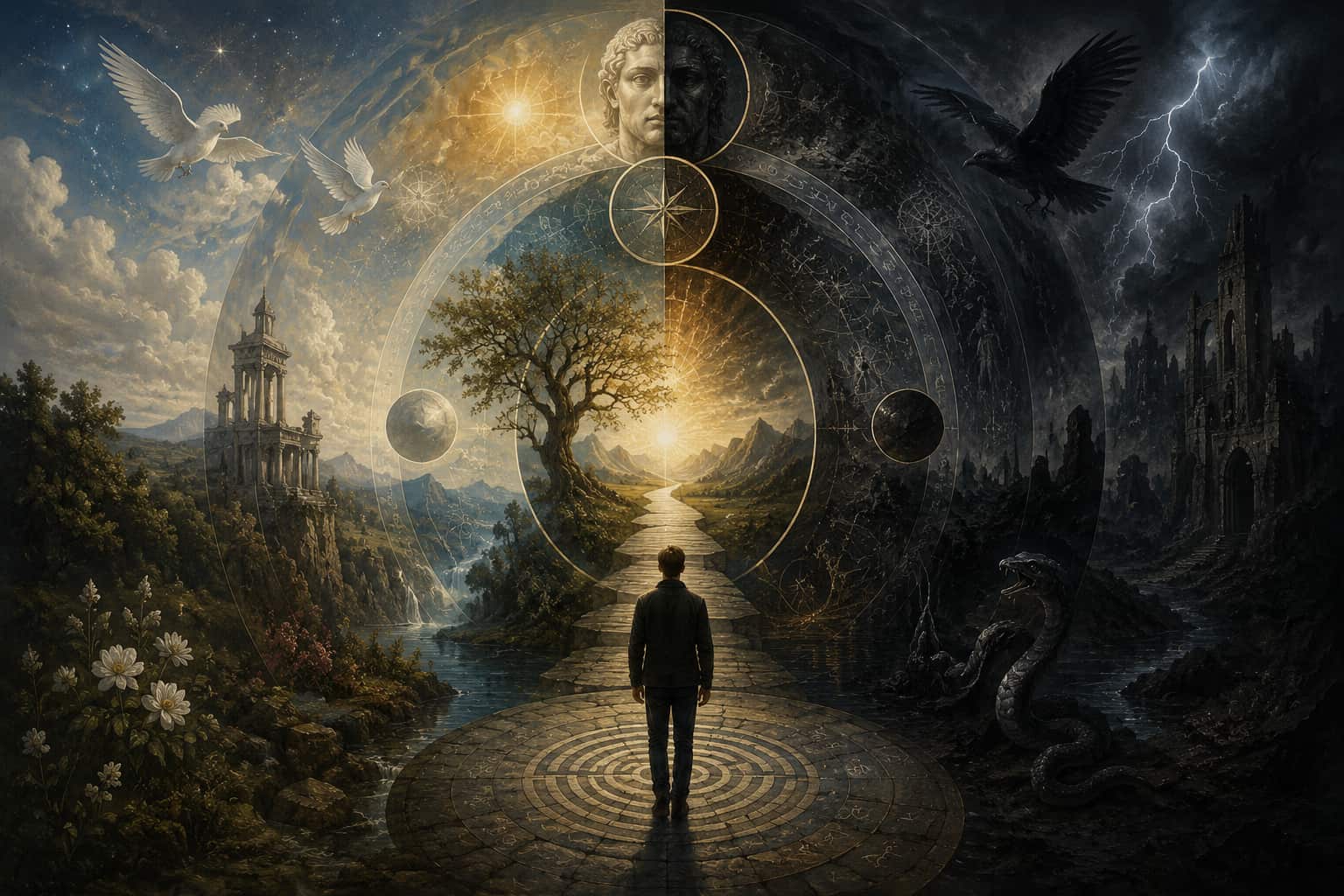
But the ego is only the centre of what you're aware of. Underneath sit your instincts, your forgotten memories, your disowned traits, the patterns running you without your permission. The Self is the centre of all of it at once — conscious and unconscious. If the ego is the captain on the bridge, the Self is the whole ship, hull and engine room included.
Why the Self matters
The reason the distinction is more than vocabulary: most people spend years trying to improve the ego — more confidence, more discipline, a better story about themselves — and stay quietly dissatisfied. That's because they're polishing the captain while ignoring the ship.
The Self functions as a kind of internal compass. When you make a decision that the ego likes but the Self doesn't, you feel a low hum of wrongness you can't argue your way out of. When the two line up, there's a settledness that doesn't depend on the outcome. Jung's claim is that maturity isn't the ego getting stronger; it's the ego learning to listen to something larger than itself.
Symbols of the Self
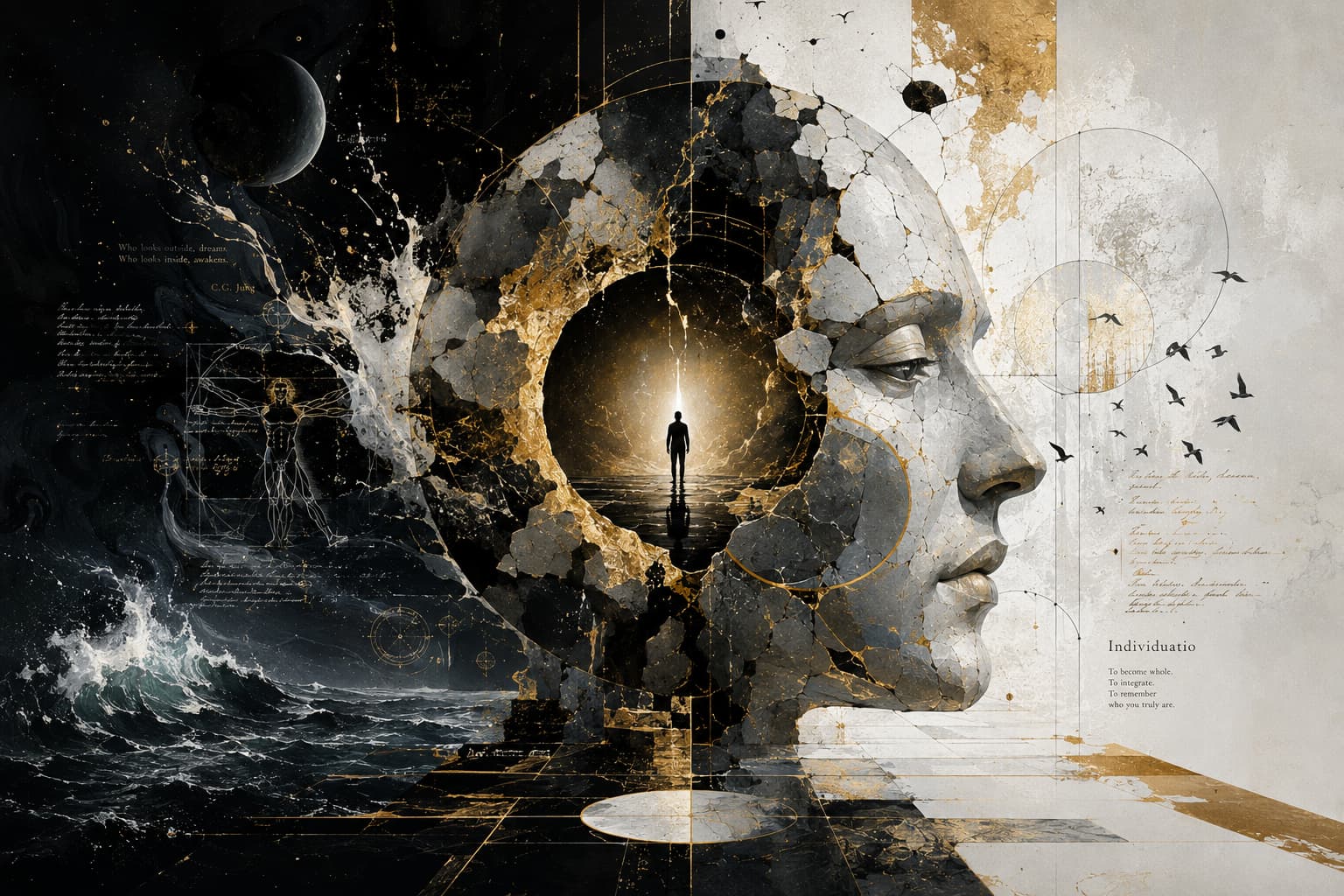
Jung noticed that when people are circling this centre — in dreams, in art, in religious imagery across cultures — the same shapes keep appearing: the circle, the mandala, the square inside a circle, figures that hold opposites in balance. He read these as the psyche's way of picturing its own wholeness.
You don't have to take that mystically. Notice how often "getting yourself together" is described as becoming round, centred, whole — and how fragmentation is described as being scattered, in pieces, beside yourself. The imagery is doing real work.
The Self and individuation
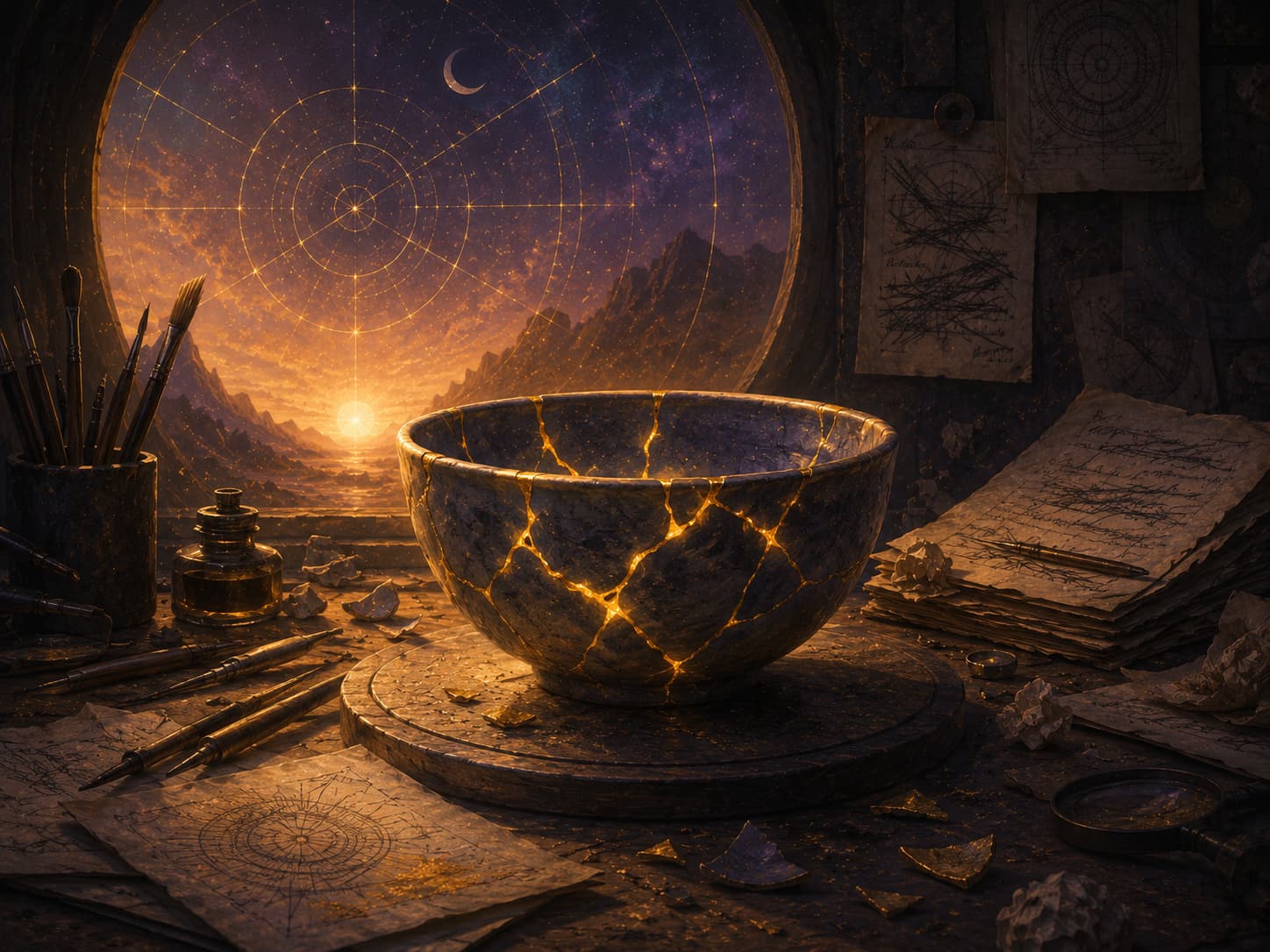
The Self isn't a place you arrive at and stay. It's the direction of a process Jung called individuation — the gradual integration of the parts of you that got split off. You move toward the Self by reclaiming what the ego pushed away, not by adding more to the ego's collection.
This is why the path runs through uncomfortable territory. Becoming whole means meeting the parts you'd rather not own, which is exactly the work the shadow demands.
How the Self shows up in everyday life
You don't need a dream journal to encounter it. The Self tends to surface in ordinary moments: when you say the true thing in a conversation and feel a click of rightness; when a decision arrives quietly and you stop arguing with yourself; when you're absorbed in something and the usual self-commentary goes silent. Those moments of "that was actually me" are the Self making itself felt through the noise of the ego.
Frequently asked questions
Is the Self the same as the ego?
No. The ego is the centre of your conscious awareness — the everyday "I". The Self is the centre and the totality of the entire psyche, conscious and unconscious. The ego is part of the Self, not the other way round.
What is the Self archetype?
Jung called the Self the central archetype: the one that organises all the others and represents the psyche's drive toward wholeness. It often appears symbolically as a circle, a mandala, or a figure that unites opposites.
How do you connect with the Self?
Not by force. You move toward it by integrating the parts of you that got split off — through reflection, paying attention to strong reactions and dreams, and the slow work of individuation. Moments of feeling unmistakably yourself are signs you're closer to it.
Last reviewed June 2026. This describes Jung's model of the psyche, which is an influential framework rather than settled empirical science.
Curious where your own psyche is most and least integrated? Take the archetype and shadow test to see which parts of you are running the show.